Supplies for Cave Paintings
Tens of thousands of years before the written word, humans were already telling stories. They just used cave walls instead of paper. Scattered across the globe — from the limestone caverns of southern France to the rocky shelters of southern Africa — ancient cave paintings offer a rare and extraordinary window into the minds of our earliest ancestors.
The oldest art in the world
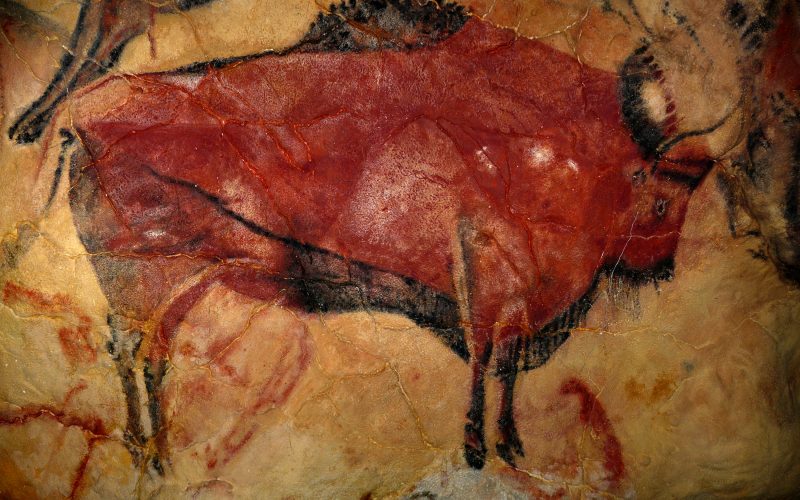
Some of the most remarkable cave art ever discovered dates back over 40,000 years. The cave paintings of Altamira in Spain, for example, depict bison, horses, and deer with a level of anatomical detail that shocked the 19th-century archaeologists who first encountered them. Similarly, the Chauvet Cave in France contains intricate drawings of woolly mammoths and cave lions, rendered with a sophistication that challenged long-held assumptions about early human intelligence.
More than just pictures
It would be easy to dismiss cave art as simple doodling, but researchers now believe these images carried deep cultural and spiritual significance. Many paintings are found in remote, hard-to-reach sections of caves — places unlikely to have served any practical purpose. This suggests the act of creating them was deliberate and meaningful. Some archaeologists theorise that cave art was connected to ritual or ceremonial practices, possibly linked to hunting, fertility, or communication with the spirit world.
Animals, symbols, and human hands
The most common subjects in cave paintings are animals. Aurochs, horses, reindeer, and mammoths appear repeatedly across different continents, hinting at the central role these creatures played in the lives of early hunter-gatherers. Alongside the animals, many caves feature abstract symbols — dots, lines, and grids — whose meaning remains a subject of ongoing debate. Perhaps the most poignant motif of all is the handprint. Found in caves from Indonesia to Argentina, stencilled hands feel like a direct message across time: I was here.
What cave art reveals about the human mind
The existence of cave paintings tells us something profound about cognitive evolution. To create representational art, a person must be able to form a mental image and then translate it onto a physical surface — a skill that requires abstract thinking, memory, and intentionality. The presence of art this complex, this early in human history, suggests that the capacity for symbolic thought emerged far sooner than previously assumed. In many ways, these paintings are evidence that the brains of our ancient ancestors were not so different from our own.
Modern science opens new doors
Advances in dating techniques have transformed how archaeologists study cave art. Uranium-thorium dating, which analyses the decay of radioactive isotopes in calcium carbonate deposits overlying the paintings, has allowed researchers to establish far more precise timelines than older carbon dating methods. These discoveries have repeatedly pushed back the estimated age of cave art, rewriting the history of human creativity in the process. New imaging technologies, including 3D scanning and multispectral photography, are also revealing details invisible to the naked eye.
Protecting a fragile legacy
Despite surviving for millennia, many cave paintings now face very modern threats. Tourism, humidity, and the introduction of foreign microorganisms have caused significant deterioration in some of the world's most celebrated sites. Lascaux Cave in France was closed to the public in 1963 after the introduction of artificial lighting and human breath led to the growth of algae and mould on the walls. Today, a full-scale replica — Lascaux IV — allows visitors to experience the paintings without endangering the originals. It is a reminder that our responsibility to these ancient works is ongoing. Cave paintings have survived the Ice Age. The question is whether they can survive us.